Top Signs You Need Garage Door Service – Don’t Ignore These
A garage door that takes two seconds longer to open than it did six months ago isn’t just getting old. It’s telling you the spring tension is off, and a spring running at reduced capacity sits under uneven stress that accelerates toward sudden failure. Most garage door breakdowns in Hamilton don’t happen without warning. They announce themselves through specific mechanical symptoms homeowners dismiss as quirks until a cable snaps or a spring breaks mid-cycle. Here’s how to read each symptom and map it to the component that’s actually talking.
If you’d rather not climb a ladder or crawl around a track, that’s a smart instinct. Call (855) 502-5595 and we’ll take a look.
What Are the Most Common Signs You Need Garage Door Repair?
The clearest signs are a door that opens unevenly, a loud or changing noise, a door that reverses before closing, visible rust or bubbling paint on the hardware, and an opener motor that suddenly sounds strained. Any one of these points to wear in a specific part: springs, cables, rollers, tracks or hinges. Catch them early and you’re usually looking at a repair. Ignore them and you’re looking at an emergency call with a car stuck inside.
That second scenario is exactly the kind of day our garage door repair service exists for. But the whole point of this article is to keep you from needing it at 7am with somewhere to be.
Here’s the short version of what to watch for in Hamilton:
- Uneven or jerky opening
- New or worsening noises
- The door reverses before it reaches the floor
- Rust or bubbling paint on springs, hinges or rollers
- An opener that sounds louder than it used to
Five Sounds, Five Components: What Each Noise Is Telling You
Noise is the earliest diagnostic signal a garage door gives you, and each type of sound comes from a different part of the mechanism. Learning to tell them apart is the difference between a cheap fix and a snapped cable.
- Grinding – usually dry or worn rollers and hinges, or a track that’s out of alignment. The metal is grinding against metal instead of rolling cleanly.
- Squealing – a lack of lubrication at the rollers, hinges or the torsion shaft bearings. Left long enough, squealing turns into seized parts.
- Popping – this one deserves attention. A pop during operation often points to a torsion spring that has slipped or is about to let go, or a cable jumping its drum. Stop cycling the door and get it checked.
- Rattling – loose hinges, brackets or opener rail bolts. Harmless on its own, but a door that rattles is a door vibrating its fasteners loose cycle after cycle.
- Thumping – a door that thumps or bangs as it travels is usually unbalanced, which loads the opener and the springs unevenly.
We hear these every week in Hamilton, and they line up the same way across every brand we service, from Genie openers to Clopay and Amarr doors. Pop and thump are the two sounds worth treating as urgent. The rest are worth scheduling before they turn into something louder.
The 60-Second Balance Test Any Hamilton Homeowner Can Run
A garage door that’s properly balanced should hold itself roughly halfway open when you release it by hand. If it drops or shoots up on its own, the spring and cable system is out of adjustment. This test takes a minute and it’s the single best early-warning check you can run on a door in Hamilton.
Here’s how it goes:
- Close the door and disconnect the opener using the release cord (pull it with the door closed so it doesn’t slam).
- Lift the door by hand to about waist height and let go.
- A balanced door stays put. A door that falls means the springs have lost tension. A door that rises on its own means they’re over-tensioned.
- Reconnect the opener when you’re done.
What this test tells you is whether the springs still carry the door’s weight. When they don’t, the opener takes the load, and openers aren’t built for that. A door that fails the balance test almost always leads to premature opener failure if it isn’t corrected.
One caution: this is a lift-and-release check, nothing more. Never try to adjust, wind or replace a torsion spring yourself. Those springs store enough energy to cause serious injury, and this is one repair to leave to a trained technician. Cables and the bottom bracket carry that same stored tension and deserve the same hands-off treatment.
Why a Door That Reverses Before Closing Isn’t Always the Sensor
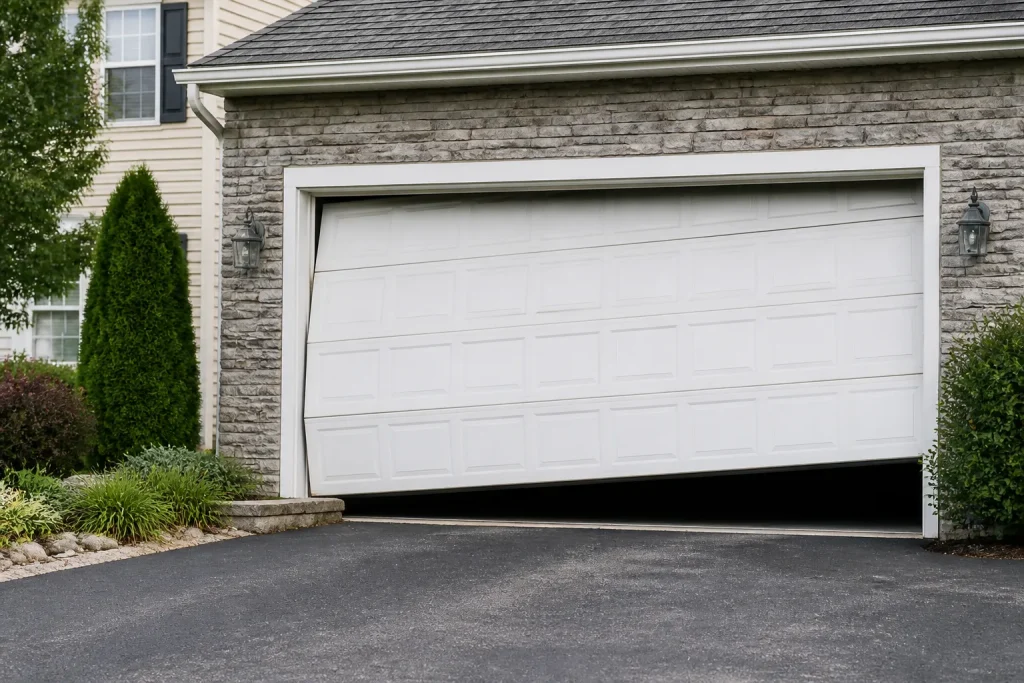
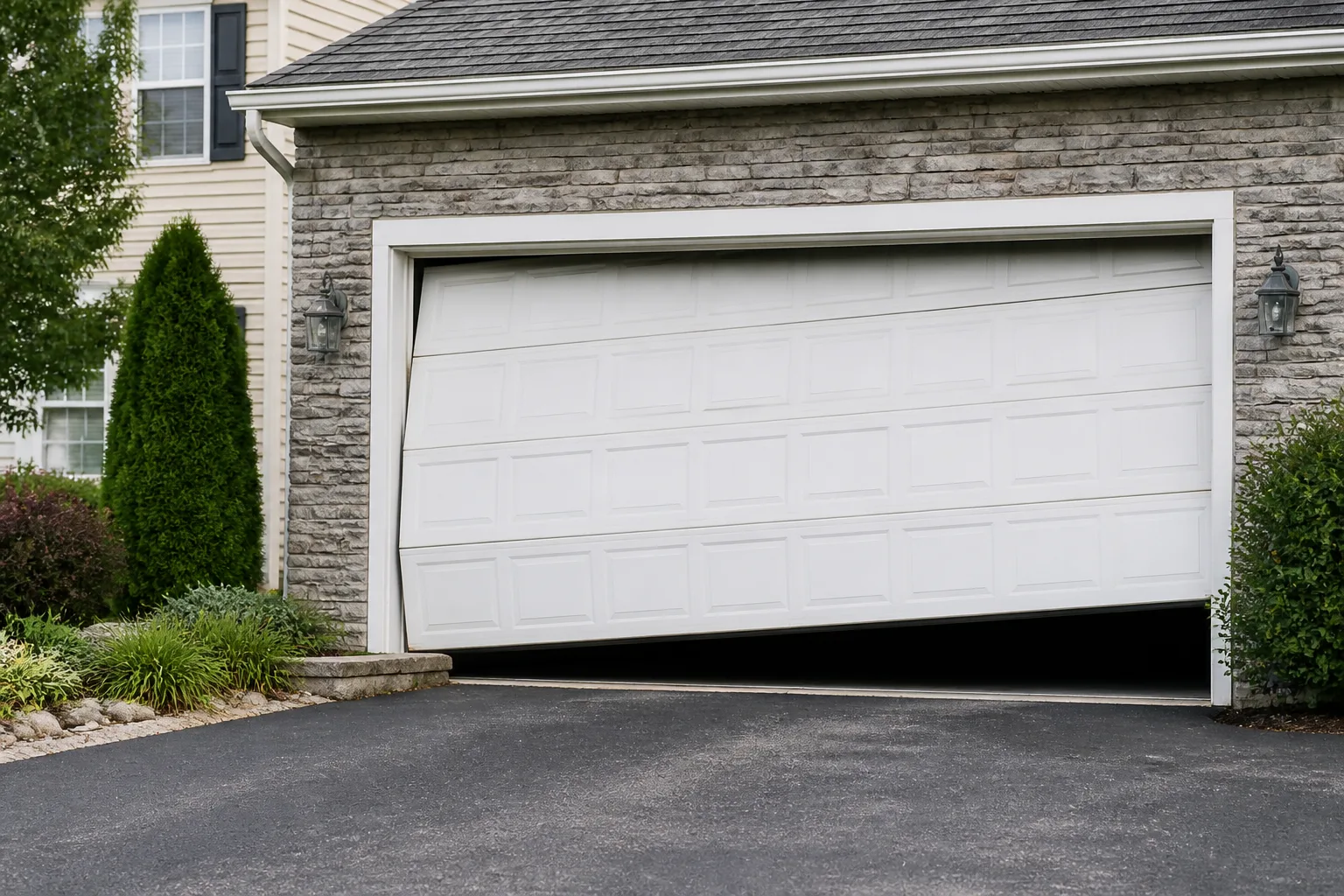
Most people assume a door that reverses before it hits the floor has a bad safety sensor. Sometimes they’re right. But if the sensors are clean, aligned and the indicator lights are steady, look elsewhere. A door that reverses mid-travel or stops short can signal track misalignment, a binding roller, or a bottom bracket problem that’s throwing the door off its path.
In our experience across Hamilton, this symptom gets misdiagnosed more than any other. Homeowners adjust the sensors, the door keeps reversing, and eventually it jams at an angle. What’s actually happening is mechanical: the door is binding somewhere, and the opener’s safety circuit reads that resistance as an obstruction and reverses.
What to check before you call:
- Are the sensor lenses clean and facing each other squarely?
- Does the door travel smoothly by hand, or does it catch on one side?
- Are there bent track sections or a roller that’s popped out of its channel?
- Is the bottom bracket or the bottom panel dented or loose?
If the door binds by hand, it’s a mechanical fix, not a sensor fix. That’s a good time to book a technician rather than keep cycling a door that’s fighting its own track.
Rust and Bubbling Paint: The 90-Day Warning You Can See
Rust and paint bubbling on the hardware are visual indicators of which parts are close to failing, often within 90 days. Metal doesn’t bubble paint for no reason; moisture has gotten behind the coating, and the corrosion underneath is weakening the part.
Where to look, in order of urgency:
- Springs and the torsion tube – rust here shortens spring life and makes sudden breakage more likely.
- Hinges and rollers – bubbling here means the roller bearings are on their way out.
- Bottom brackets and track bolts – corrosion on load-bearing hardware is the one to take seriously.
Hamilton’s freeze-and-thaw swings in winter and humid summers push this along faster than folks expect. A door built by Wayne Dalton, Clopay or Amarr can be structurally sound and still have hardware quietly corroding underneath. If you see bubbling on a load-bearing part, that’s your cue to have it looked at before the season flips.
Proactive replacement of rusted rollers, hinges and springs is one of the best values in garage door maintenance. It’s a small job now versus a broken-spring emergency later.
When Your Opener Sounds Louder, the Problem Is Usually the Door
If your opener motor sounds louder than usual or its light flickers while the door runs, the culprit is usually the door, not the opener. The motor is straining against resistance that a door in good balance wouldn’t have. Flickering lights point to a heavier electrical draw as the motor works harder than it should.
What that strain actually means:
- A binding door or worn rollers that the opener is fighting
- Springs that have lost tension, so the opener lifts the full weight
- A worn opener gear or drive that’s ready to fail because it’s been overworked
It’s tempting to assume the opener is dying and start shopping for a new one. Half the time, the opener is fine and the door is the problem. This is why garage door opener repair starts with a full look at the door’s balance and travel, not just the motor. We handle opener fixes from Craftsman and Genie units to LiftMaster and Chamberlain systems, and we fix the door first when that’s what the diagnosis calls for. A repair-first approach saves the cost of an opener you didn’t need.
When to Call a Pro
Call a professional the moment you hear a pop, see a snapped cable or a spring with a visible gap, or can’t lift the door by hand. Those are signs the stored tension in the spring system has already done its damage, and cycling the door further is where people get hurt. Track damage, a bent bottom bracket, and a door hanging at an angle are also pro territory.
If the door still moves but fails the balance test, makes a new noise, or scrapes on the way down, book it before it turns into an emergency. Our technicians have up to 11 years of experience with torsion and extension spring repair, and we work on the brands already in your garage: LiftMaster, Chamberlain, Genie, Clopay, Amarr, Wayne Dalton, Craftsman and Raynor.
Related services in Hamilton: garage door installation when a door has reached the end of its life, and emergency garage door service when it can’t wait. For the full picture of who we are, visit Hamilton Garage Door Repair Pros.
The Bottom Line
Most garage door failures give you plenty of warning, and every symptom in this article points to a specific part. A louder opener usually means a straining door. A door that reverses points to a track or bracket problem once sensors are ruled out. Grinding, squealing, popping, rattling and thumping each have their own cause, and the 60-second balance test catches spring and cable wear before a break. The pattern is simple: catch it early, fix the actual component, and you avoid the emergency.
If you’re in Hamilton and need help, Hamilton Garage Door Repair Pros offers free estimates – call (855) 502-5595. One company handles the door and the opener, from snapped spring to full installation, and the price is quoted and agreed before any work starts.
Frequently Asked Questions
A failing spring usually shows itself as a door that opens slowly or unevenly, a loud popping sound during operation, a door that fails the halfway balance test, or visible gaps and rust on the spring coil. Any of these means the spring has lost tension and should be checked before it breaks. Call (855) 502-5595 for an estimate – estimates are free.
Minor things like lubricating rollers and hinges or clearing the safety sensors are fine to handle yourself. Spring, cable and bottom-bracket repairs should always go to a professional because those parts store dangerous tension. When in doubt, call a pro. Call (855) 502-5595 and we’ll tell you what to watch for.
It’s often a sensor problem, but once the sensors are clean and aligned, a reversing door usually signals track misalignment, a binding roller or a bottom bracket issue. The opener reverses because the door is binding and the safety circuit reads it as an obstruction. Call (855) 502-5595 for an honest diagnosis.
Not usually. A louder motor typically means the door is out of balance or binding, and the opener is straining to move it. Fix the door first and the opener often quiets down. Call (855) 502-5595 for a free estimate before you buy a replacement you may not need.
Written by the team at Hamilton Garage Door Repair Pros.
Need Garage Door Help?
Call Hamilton Garage Door Repair Pros - the local pro we connect you with is licensed and insured, here with fast after-hours help in Hamilton.
(855) 502-5595