Last updated November 21, 2026
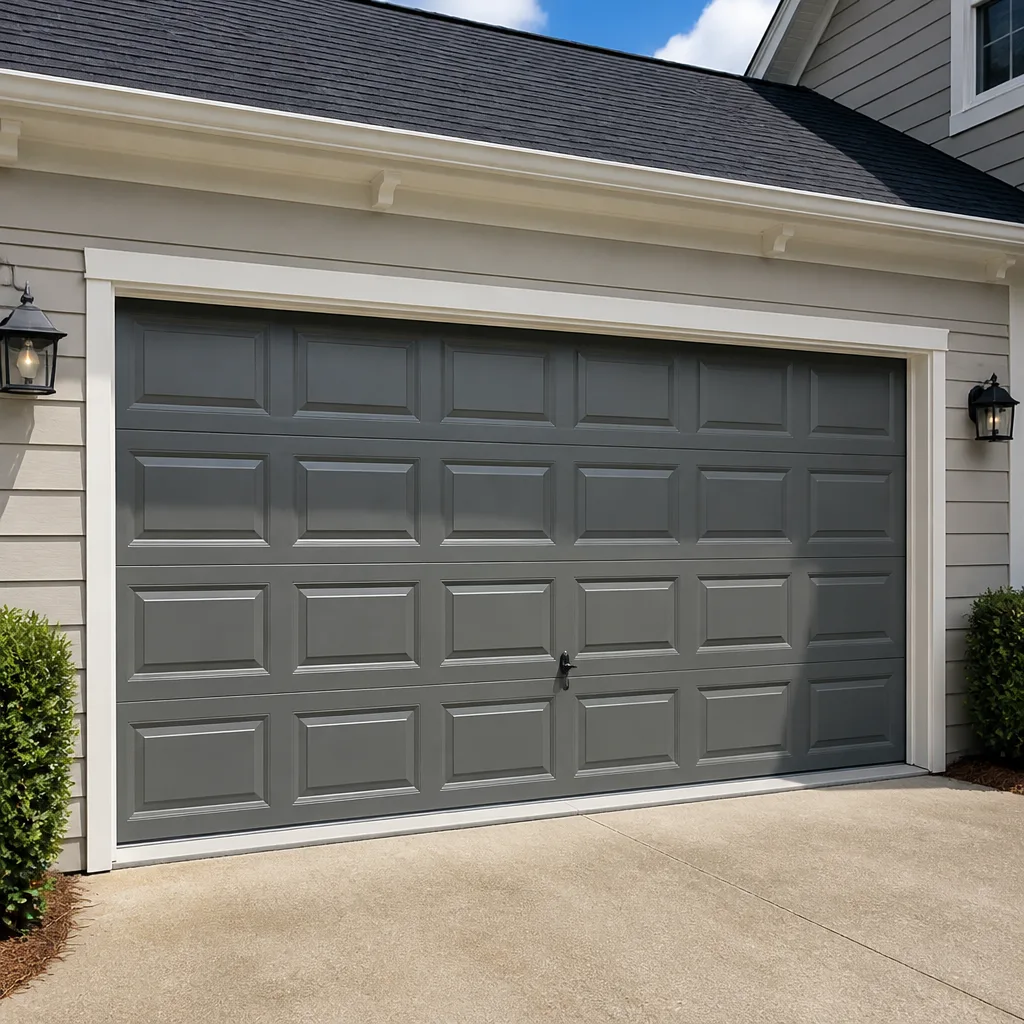 Raised-panel steel
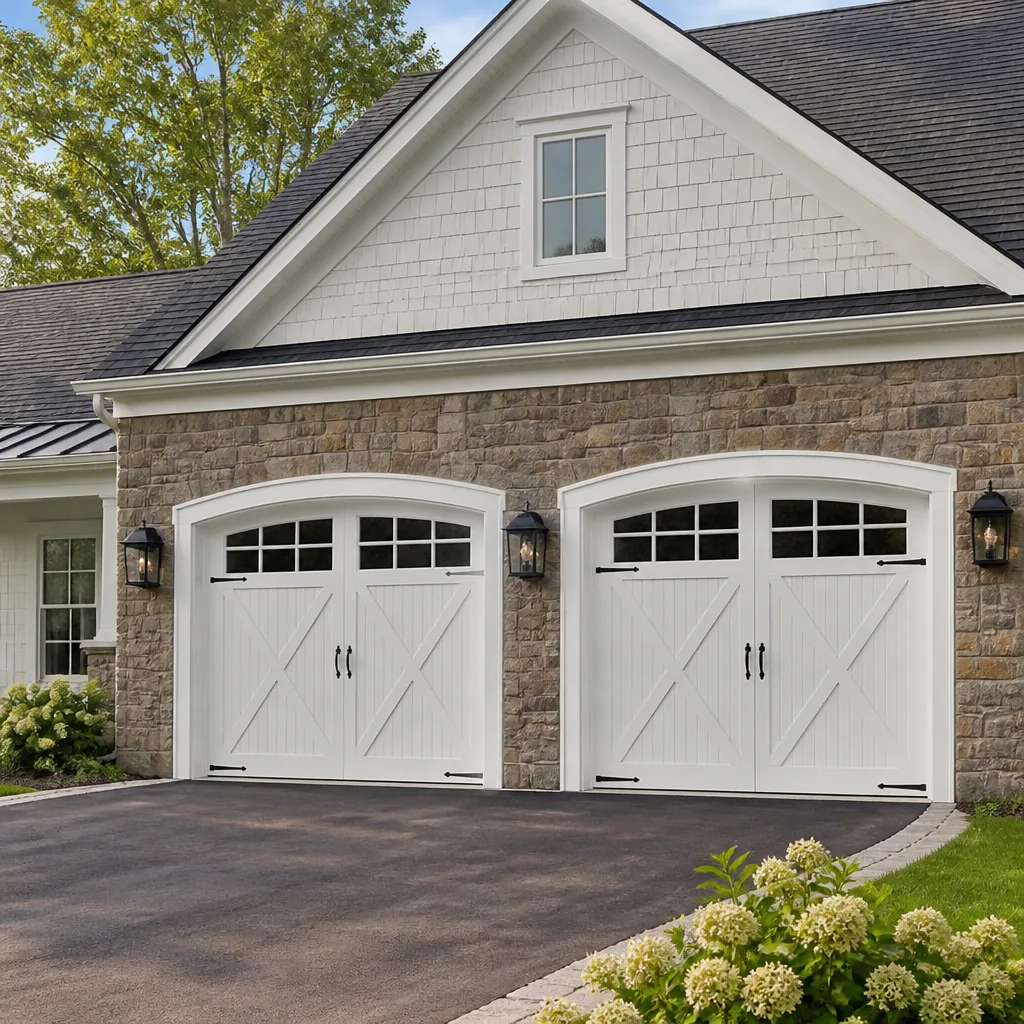 Carriage house
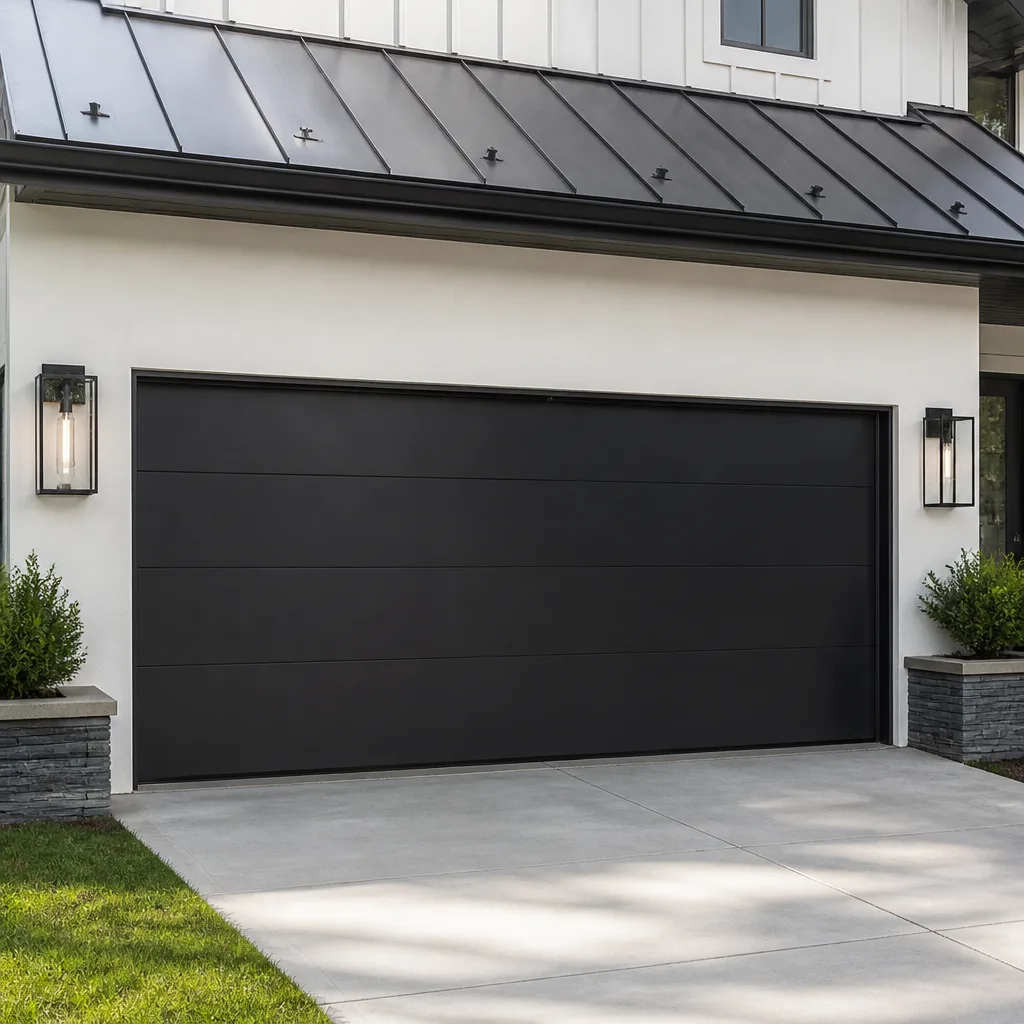 Modern flush
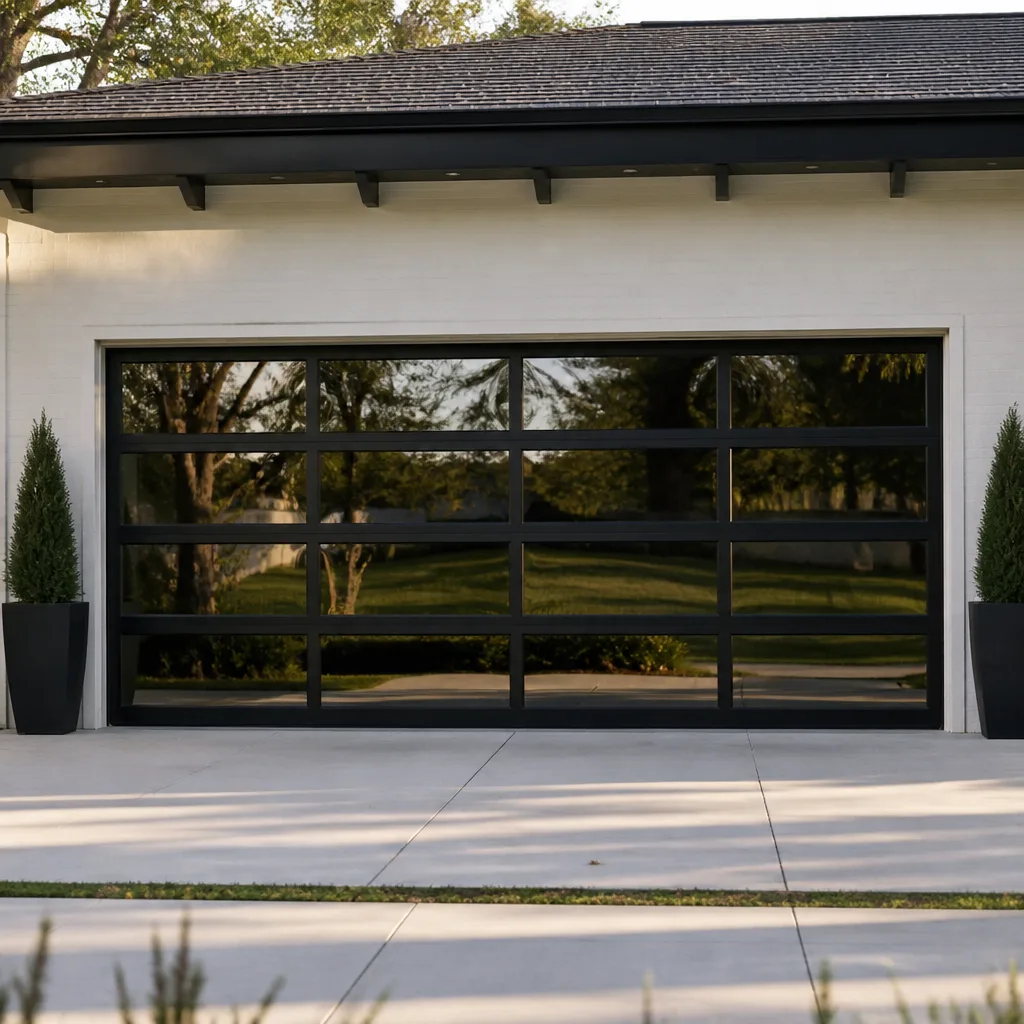 Full-view glass
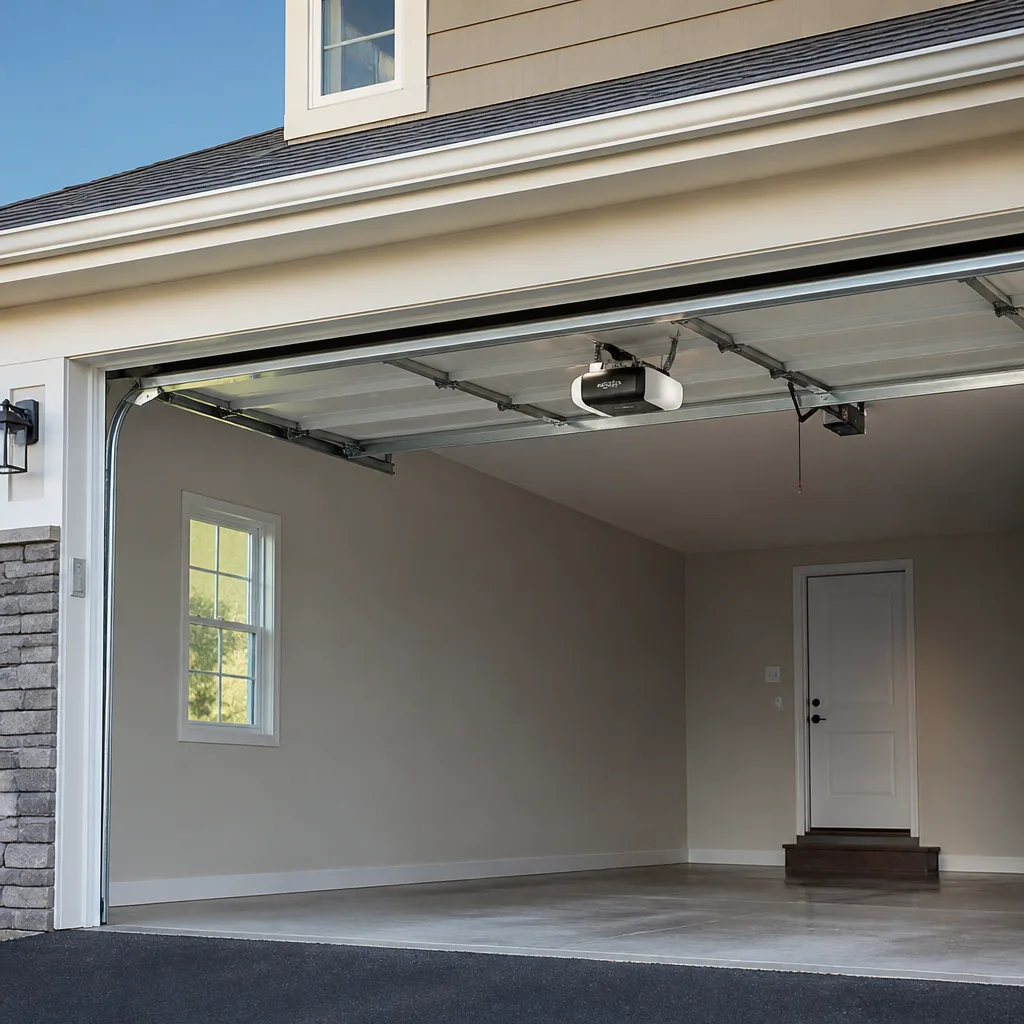 LiftMaster openers
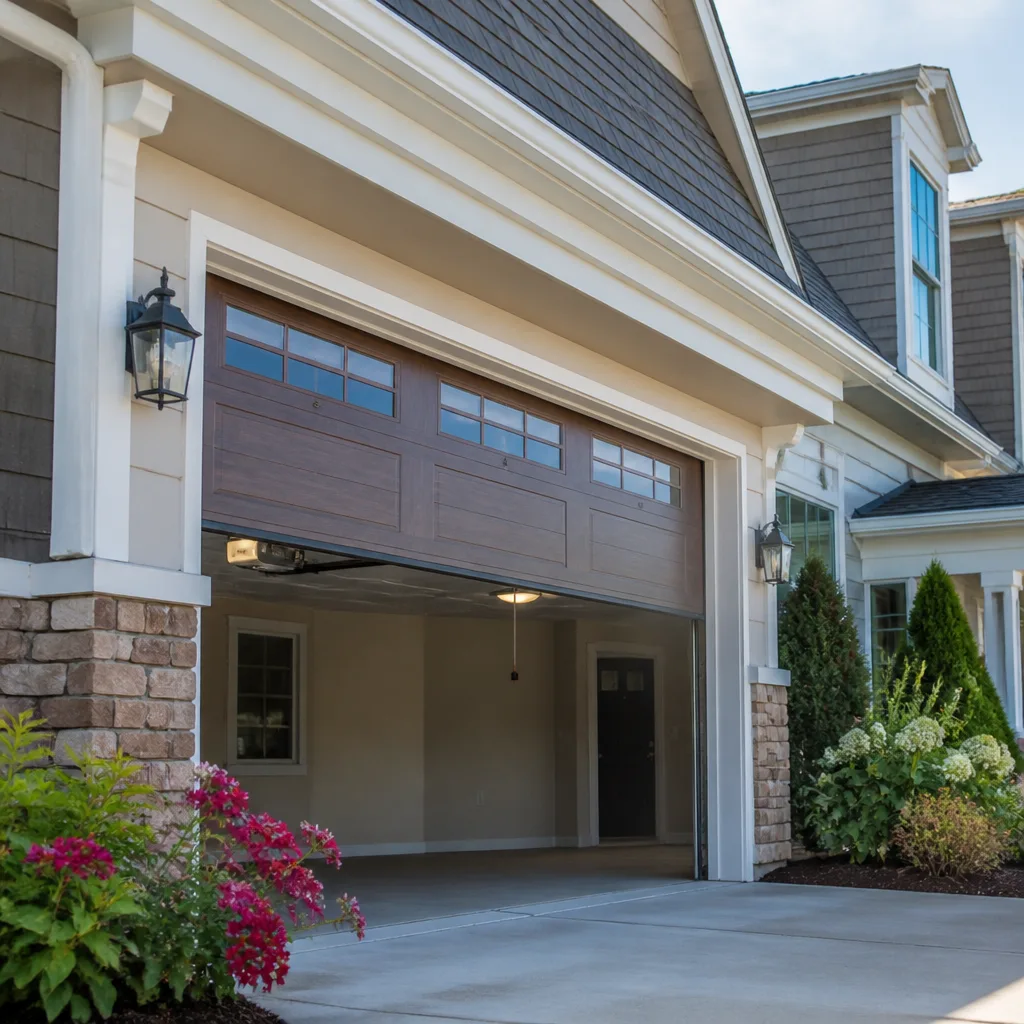 Chamberlain openers
Full 25-point door and opener safety check with every visit - springs, cables, rollers, tracks, and your LiftMaster or Chamberlain opener included
You get a price before we start. It does not change when the pro arrives.
Get your free estimateThe Complete Guide to Garage Doors in Hamilton
Most Hamilton homes were built before insulated garage doors were standard, which means the door you inherited is probably costing you more in energy and repairs than you realize. That oversized, uninsulated slab of steel or wood hanging off your garage is the largest moving object in your house, and in a place with real winters and humid summers, it takes a beating. This guide walks through what actually matters for Hamilton homeowners: the door materials that survive our freeze-thaw cycles, the sizing gaps in older homes, opener wiring quirks in pre-1990s garages, and the point where repair stops making sense and replacement starts. By the end, you’ll know how to make decisions on your specific door instead of guessing.
Quick Answer
Garage door decisions in Hamilton come down to three things: the material and age of your existing door, the condition of your springs and opener, and how well the whole system fits the home. Repair is usually the right call when the door structure is sound and only the springs, cables, rollers, or opener have failed. Replacement makes more sense when the door panels are rusted through, the frame is warped, or repairs would cost a large share of a new door’s price. A written estimate after an on-site assessment settles it.
Styles & brands we work with
- Raised-panel steel
- Carriage house
- Modern flush
- Full-view glass
- LiftMaster openers
- Chamberlain openers
Table of Contents
- Why Hamilton Garages Age Differently
- How Freeze-Thaw Cycles Affect Door Materials
- Door Sizing in Older Hamilton Homes
- Opener Compatibility With Older Wiring
- Repair vs. Replace: Finding the Threshold
- HOA Rules in Newer Hamilton Developments
- Springs and Safety: What Homeowners Should Know
- Seasonal Maintenance That Pays Off
Why Hamilton Garages Age Differently
Hamilton’s housing stock is a patchwork. You have postwar ranches and split-levels with original single-car garages, mid-century colonials with doors that have been replaced once or twice, and newer townhome developments where attached garages are tucked under living space. Each one ages on its own schedule, and the Mid-Atlantic climate pushes the process along.
The key thing about Hamilton is the swing between seasons. Summer humidity works its way into wood panels and into the seams of steel doors, then winter cold contracts everything and pulls it apart again. That cycle repeats every year. A door that would last twenty years in a dry climate may show real wear in Hamilton in considerably less time if it’s never maintained.
Older Hamilton garages also tend to sit unheated and unfinished. There’s no vapor barrier, no insulation in the walls, and the concrete floor is exposed. That means whatever moisture gets in during a humid stretch hangs around, and the door – the biggest surface facing the outside – absorbs the worst of it. When we assess a door in these homes, we’re really assessing how much of that moisture exposure the door has already survived.
This matters because the answer to “should I repair or replace” is different for a 1960s ranch in Hamilton than it is for a newer townhome a few streets over. If you already know the door itself is the problem and not the mechanism, garage door repair is the place to start, since most doors can be brought back to working order before they need to come down entirely.
How Freeze-Thaw Cycles Affect Door Materials
Steel, wood, and fiberglass handle Hamilton’s winters very differently, and the failure modes are not the same. Knowing which one you have tells you what to watch for.
Steel doors
Steel is the most common residential door material and the most forgiving, but it isn’t immune. The trouble starts at the bottom section, where road splash, melting snow, and standing water collect. Paint chips, rust creeps under the paint film, and once rust reaches a seam or hinge point it spreads through the season cycle. Steel doors with dents hold moisture in the dented area, which accelerates the corrosion. The fix is keeping paint intact and washing the bottom section after winters.
Wood doors
Wood is where freeze-thaw is most unforgiving. Moisture enters the grain, freezes overnight, expands, and splits the wood from the inside. Repeated cycles open the seams between panels, loosen joinery, and warp the frame. A wood door in Hamilton can be beautiful and long-lived, but it needs sealing on a schedule, and the bottom rail and side stiles are where the rot starts. If you’re looking at a wood door and can push a screwdriver into the bottom edge without resistance, that’s the wood telling you it’s done.
Fiberglass doors
Fiberglass handles moisture better than wood but can develop surface crazing over time, especially on the sun-facing side. It’s stable in cold and doesn’t warp like wood, but cheap fiberglass units can crack at stress points around the hinges and hardware. Mid-grade fiberglass is a solid choice for Hamilton homeowners who want wood’s look without wood’s maintenance.
If your door is a Clopay, Amarr, Wayne Dalton, or Raynor model, we’re familiar with how each brand’s panels and hardware wear through Hamilton’s seasons, and we can tell fairly quickly whether the material itself has reached end of life or just needs service.
Door Sizing in Older Hamilton Homes
One of the most common surprises on a Hamilton replacement job is discovering the existing door opening doesn’t match modern standard sizing. Older homes often have openings that were built to imperial measurements common at the time, or that were framed in by hand without the tight tolerances newer builds use.
Standard residential door sizes you’ll run into:
- Single-car: 8 to 9 feet wide, 7 feet high (most common width is 8 feet)
- Double-car: 16 feet wide, 7 feet high
- Taller openings: 8 feet high for garages with higher clearances or that accommodate taller vehicles
When the existing opening doesn’t match a standard size, you have a few options.
- Measure the actual clear opening, not the old door. The replacement has to fit the frame, not the door you’re taking out.
- Use a custom-size door. Manufacturers offer non-standard widths and heights, and it’s the cleanest fix, though it takes longer to order.
- Reframe the opening. Sometimes the smart move is bringing the opening to a standard size, especially if the existing frame is warped or rotted.
- Use a filler or trim kit. For small gaps, trim and a slightly oversized door can cover the difference without reframing.
In Hamilton’s older neighborhoods, we regularly run into this on 1950s and 1960s homes where the original door was a single-piece tilt-up and the opening was framed for it. Converting to a sectional door is doable, but the headroom and side room measurements have to be checked first. That’s why any garage door installation starts with measurement, not with a door order. Skipping that step is how people end up with a door that doesn’t fit.
Opener Compatibility With Older Wiring
If your Hamilton home predates the 1990s, the garage wiring is likely simpler than what modern openers expect. That doesn’t automatically mean the opener won’t work, but it does mean a few things have to be checked before installation.
What to check on older garages:
- Dedicated circuit: The opener needs its own circuit, not a shared leg with lighting or outlets elsewhere in the house.
- Grounding: Older two-wire circuits without a ground need attention before modern openers go in.
- Outlet location: Ceiling-mounted openers need an outlet near the motor, and older garages often have the outlet on a side wall instead.
- Wall switch wiring: The low-voltage wire running from the wall control to the opener head – older garages may have it stapled in odd places or run through the ceiling in ways that complicate a new install.
None of this is a dealbreaker, but it changes scope. A garage door opener repair call on an older Hamilton garage often turns up wiring issues that weren’t obvious until we opened things up. If the wiring is sound and the opener is simply tired, replacing the unit itself is straightforward. If the wiring needs work, we flag it before doing anything.
We work with the brands most homes actually have. LiftMaster and Chamberlain units are common in Hamilton garages from the 1990s forward, and Craftsman openers show up frequently in homes built or updated in the 2000s. Genie and Raynor systems are also part of the mix. We’re trained on all of them, so we don’t have to tell a homeowner their brand isn’t one we handle.
Modern openers vs. older doors
One thing homeowners don’t always consider: a new opener on an old, heavy door can strain the door’s hardware. Spring tension, roller condition, and hinge wear all factor in. If you’re upgrading the opener, we check the door’s balance first. Otherwise the new opener works harder than it should and you get premature failures.
Repair vs. Replace: Finding the Threshold
The repair-or-replace question is the one we get most in Hamilton, and it doesn’t have a single answer. What matters is whether the door structure is sound – panels, frame, and bottom section – and whether the mechanism (springs, cables, rollers, opener) is the only thing failing.
Repair usually wins when:
- The door panels are intact, no rust-through or rot
- The frame is straight and the opening is sound
- Only springs, cables, rollers, or the opener have failed
- The door is under about 15 years old and reasonably maintained
- You have a specific brand door we can source parts for – Clopay, Amarr, Wayne Dalton, and Raynor all have good parts availability
Replacement usually wins when:
- Panels are rusted through or rotted at the bottom
- The door is visibly warped or no longer sits square in the opening
- The insulation is failing on an older door and you want a warmer garage
- Repairs would run a substantial share of a new door’s price
- The door predates safety features like pinch-resistant sections or an opener with reversing sensors
There’s a gray zone where both are defensible. A 2005 steel door with a failing bottom section on a home that’s otherwise in good shape might be worth repairing. The same door with warped panels and rust at every seam usually isn’t. A written estimate after inspection tells you which side of that line you’re on, and we’ll tell you honestly when repair stops making sense. Replacement isn’t always the answer, and treating every repair call as an upsell is bad business.
One more factor specific to Hamilton: the front-facing garage door is a visible part of the home’s facade. In a neighborhood where most homes still have their original doors, replacing with a modern insulated model can change the whole look of the house. In a neighborhood where most doors have been updated, a visibly tired original stands out in the wrong way. That’s a market consideration, not a technical one, but it’s part of the calculation.
HOA Rules in Newer Hamilton Developments
If you live in one of Hamilton’s newer townhome or planned developments, your HOA almost certainly has something to say about your garage door. Material, color, panel style, window options, and even the finish can all be restricted. Homeowners who buy a door first and ask permission later regularly find themselves redoing the whole thing.
What to check with your HOA before you buy:
- Approved color list. Many Hamilton-area HOAs restrict to a specific palette. Confirm the exact shade before ordering.
- Panel style and window options. Some HOAs prohibit windows on garage doors facing the street, or restrict the panel layout.
- Material restrictions. Steel is usually fine, but wood and fiberglass may need approval if they affect the visual uniformity of the development.
- Submission process. Most HOAs require a written request with the door spec sheet and a photo or rendering. Get approval in writing.
- Contractor requirements. Some HOAs require proof of licensing and insurance from the installer, which we can provide on request.
The upside is that HOAs in newer developments often mean doors across the street are all similar age and wearing on a similar timeline. That’s why a Hamilton townhome development built in phases can have a wave of replacements happening all at once – neighbors comparing notes on the same door failure a few streets over.
Springs and Safety: What Homeowners Should Know
Garage door springs are the most dangerous component in the whole system, and it’s not close. A torsion spring under tension, or an extension spring that’s stretched, holds enough stored energy to cause serious injury if it releases unexpectedly. This is not a component to test, tighten, or replace without training and the right tools.
What homeowners should understand without touching anything:
- The lift is not one-sided. A broken spring often means the door comes down hard or comes up unevenly. Don’t force it.
- The door can be locked out of position. A door stuck halfway is a safety problem; call for service rather than trying to muscle it.
- Two springs are usually replaced as a matched pair. If one has failed and both are the same age, the second one is on borrowed time.
- Extension springs should have safety cables. If yours don’t, that’s a conversation worth having on any service call.
What a spring replacement actually involves: measuring the wire gauge and inside diameter of the existing spring, matching the cycle rating to how much the door is used, and setting the tension correctly. A mismatched spring either wears out fast or leaves the door unbalanced. On a Raynor or Wayne Dalton system, the geometry of the original install matters, and a one-size-fits-all spring from a big-box store often doesn’t match. This is exactly the repair category general handymen decline, and we take it on directly.
When springs become an emergency
A snapped spring that leaves the door stuck open exposes the house to weather and to anyone walking in. A snapped spring that leaves the door stuck closed traps a car. Either one is a reason to call for emergency service in Hamilton rather than waiting for a scheduled appointment. If it’s a broken spring locking the house down, garage door spring repair covers what to expect.
Seasonal Maintenance That Pays Off
Most garage door failures in Hamilton are predictable. The door doesn’t just break one day – it wears out over a season or two first, and there are early signs. A little seasonal attention extends the door’s life and catches problems before they strand you.
A reasonable maintenance rhythm:
- Spring: After winter, check the bottom section for rust or rot, inspect the springs visually (from a distance – don’t touch), and test the door’s balance by disconnecting the opener and lifting it halfway. It should stay.
- Summer: Lubricate rollers, hinges, and the torsion bar (not the springs). Listen for squeaks or grinding.
- Fall: Check weather stripping at the bottom and sides. Seal any gaps or replace worn strips before snowmelt finds them.
- Winter: Keep snow and ice off the bottom section and clear the track of any debris. If the door freezes to the floor, don’t force it open.
If your opener is over ten years old, expect a replacement in the next few years and budget accordingly. If your door is over fifteen, expect the first major repair, likely a spring or cable. That’s not a scare tactic; it’s the wear curve those components follow.
For homes with a brand-specific opener that’s behaving oddly (remote working intermittently, reversing unexpectedly, light not working), it’s usually cheaper to diagnose and repair than to replace the whole opener. Craftsman and LiftMaster units in particular are well-supported for parts, so repair stays viable longer than it does on off-brands.
Common Mistakes to Avoid
- Ordering a door before measuring the opening. Standard sizes don’t always match what’s already in a Hamilton home, especially older ones. Measure the clear opening first, and let the size drive the order.
- Trying to adjust springs yourself. This is the single most dangerous garage door task there is, and the wrong call can cause serious injury. Springs are a trained-pro-only job.
- Replacing the opener when the door is the problem. If the door is heavy, unbalanced, or binding, a new opener works harder and fails sooner. Fix the door first.
- Choosing a door for looks without checking the HOA rules. Most Hamilton-area HOAs have approved color and style lists. Get approval in writing before ordering.
- Ignoring a slow or uneven door. A door that hesitates or runs crooked is telling you something is worn or misaligned. Waiting usually means a bigger, costlier repair.
- Letting rust or rot spread from the bottom section. Bottom rails and panels fail first in this climate. Catch them early and the repair is small; ignore them and the whole door is compromised.
- Skipping the written estimate. Any contractor who can’t put the scope and price in writing before work starts isn’t someone to hire.
See the difference
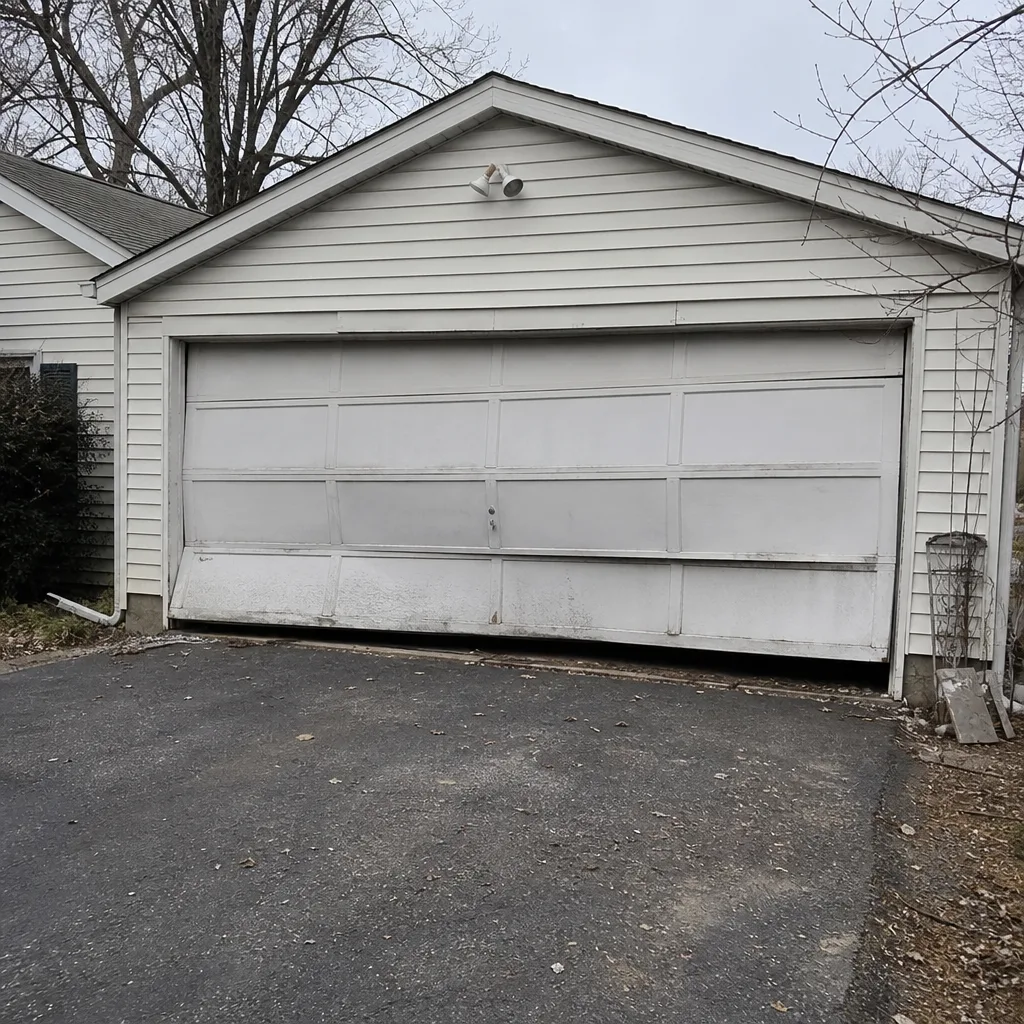 Before
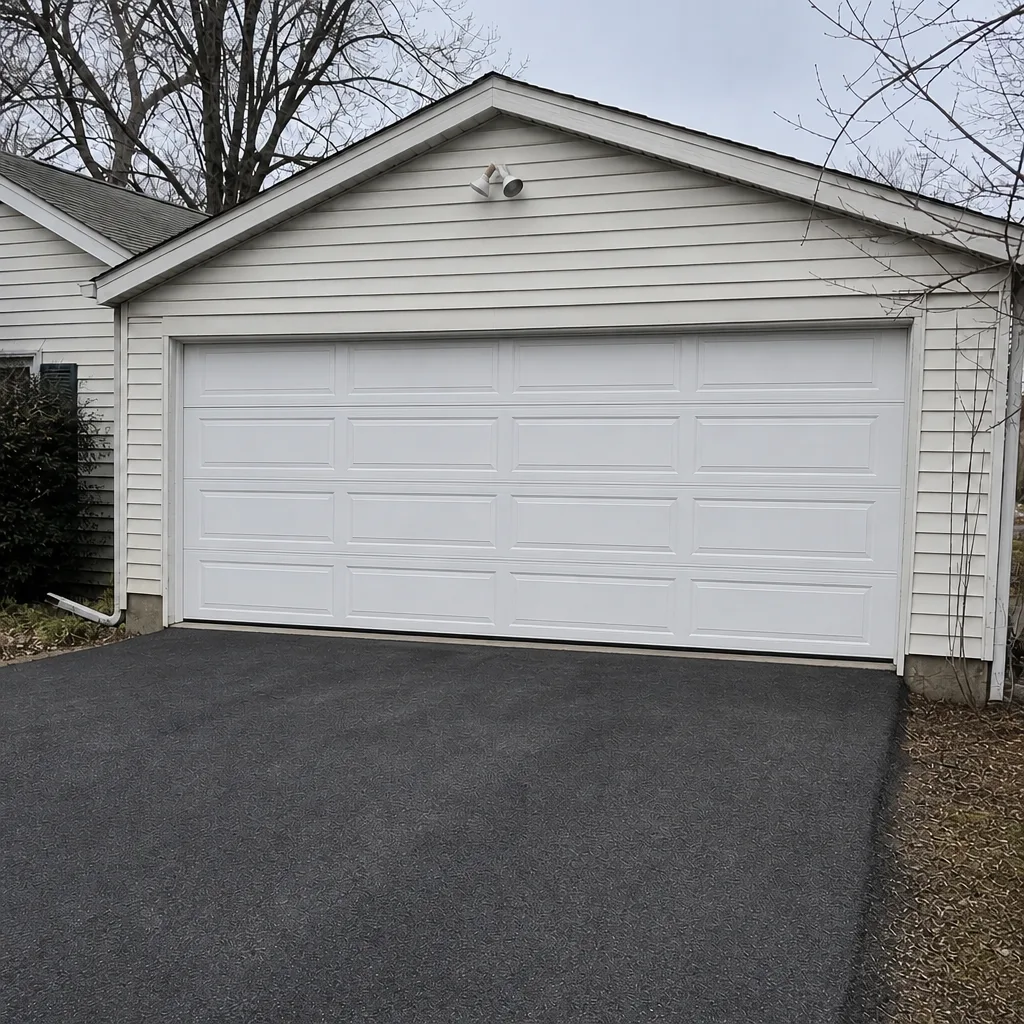 After
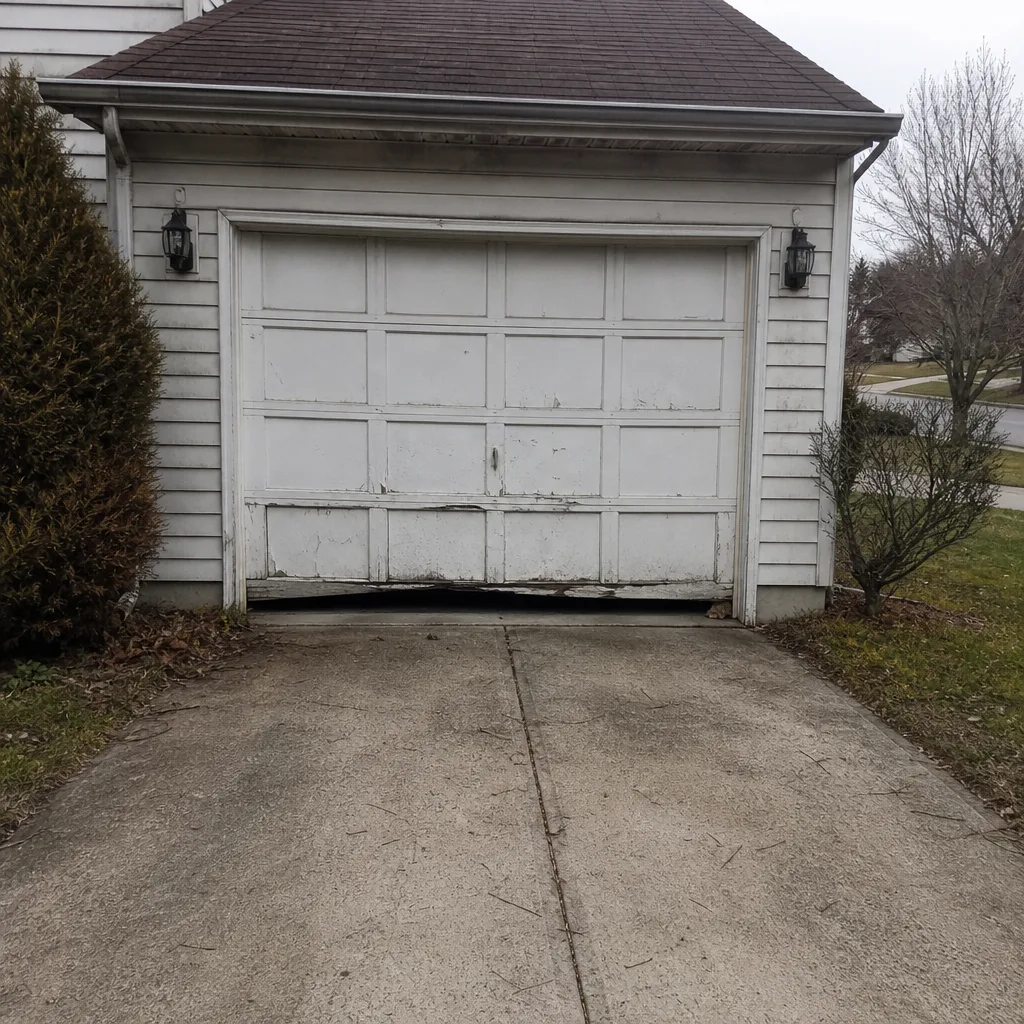 Before
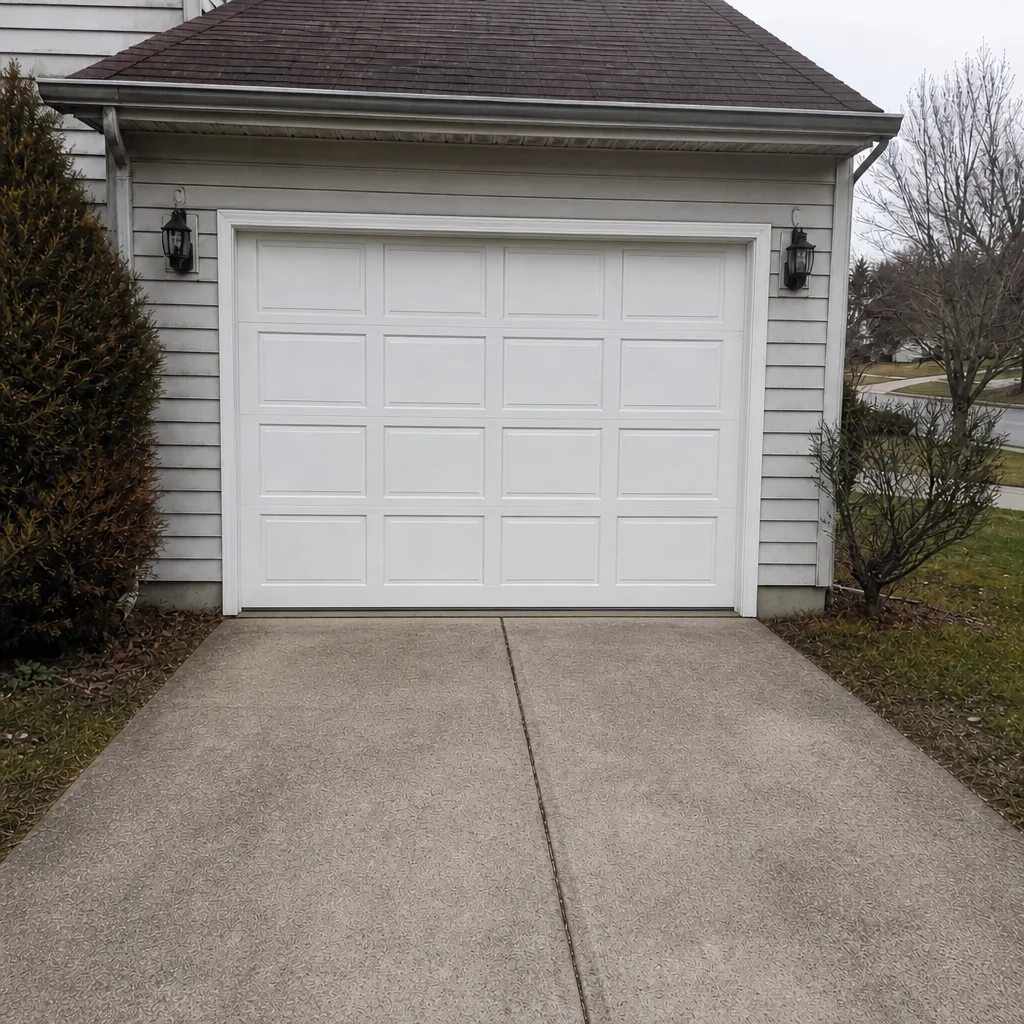 After
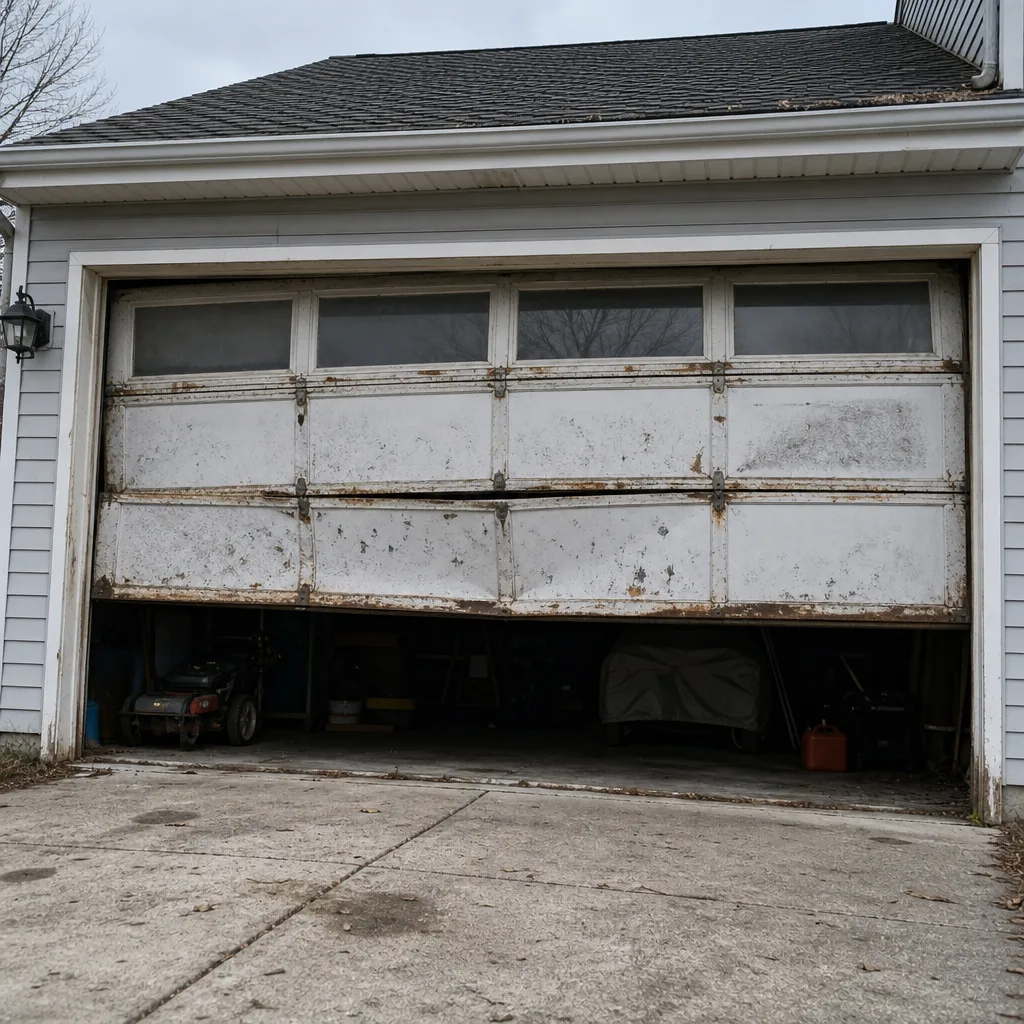 Before
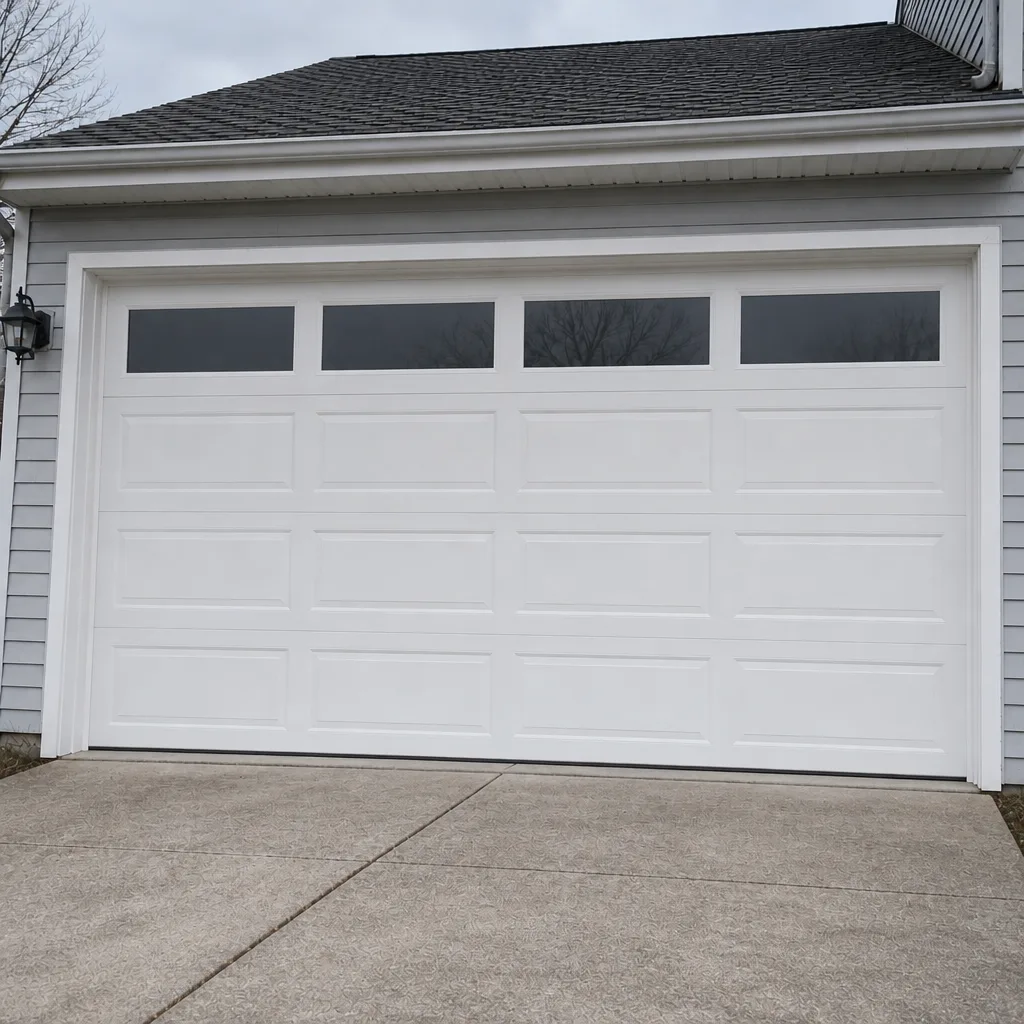 After
When to Call a Professional
Some jobs are worth knowing how to think about; others aren’t safe to touch. Call a professional immediately if a spring has snapped, if the door has come off its track, if the door won’t close and the house is open to weather or anyone walking in, or if the opener behaves erratically and the door reverses or stops unpredictably. Call for a scheduled assessment if the door has started running unevenly, if you’re hearing grinding or scraping that wasn’t there a season ago, if the door has visible rust or rot at the bottom, or if you’re within a year of a door replacement and want a written estimate to plan around. Hamilton Garage Door Repair Pros offers free estimates in Hamilton – call (855) 502-5595 – and we work on the brands already installed in the area, so you don’t have to wonder if your specific door or opener is covered. Emergency service is available when a broken door can’t wait.
Frequently Asked Questions
Spring repair in Hamilton typically runs in the low hundreds per spring, and most doors with two springs are replaced as a matched pair, which roughly doubles the cost. That’s an estimate, not a quote – the written estimate after inspection sets the final price. Call (855) 502-5595 for an exact quote; estimates are free.
For emergency situations – a broken spring trapping a car, a door stuck open, or a door that’s come off its track – we aim to get someone out the same day. Call (855) 502-5595 and describe what’s happening. For scheduled work like installation or replacement, we plan the visit around measurement and ordering, so it’s a booked appointment rather than a same-day call.
No. We inspect the door and give you a written estimate before any work starts, and the price we quote is the price you pay for that scope of work. If the inspection turns up something not visible up front, we discuss it with you before proceeding – never after. Call (855) 502-5595 to schedule an estimate.
The local professionals we connect you with are licensed and insured as their state requires. That’s a reasonable thing to ask of any contractor working on your home, and we’re glad to provide details before scheduling. Call (855) 502-5595 with any licensing or insurance questions.
Often yes, but the door has to be balanced and reasonably sound first. A new opener on a heavy or binding door wears out faster. We check the door’s condition and the existing wiring before recommending an opener replacement. Call (855) 502-5595 to have it assessed.
In most newer Hamilton developments, yes. Most HOAs have approved color and style lists and require a written submission with the door spec. Get approval before ordering – it saves the cost and hassle of redoing a door that gets rejected after installation. Call (855) 502-5595 if you need the spec sheet for your HOA.
The Bottom Line
Most Hamilton garage doors are serviceable for a long time if the bottom section, springs, and opener wiring are looked after. Repair is usually the right call when the door is structurally sound; replacement makes sense when panels, frame, or insulation have reached end of life. Match the material to Hamilton’s climate, measure the opening before you buy, check HOA rules early, and never touch the springs. A written estimate after inspection is what settles any real decision, and it’s free. When it’s time to get a straight answer about your door, Hamilton Garage Door Repair Pros is one call away at (855) 502-5595 – whether that’s a repair, a spring, an opener, or a full replacement – and we’ll tell you honestly which one you actually need.
Written by the team at Hamilton Garage Door Repair Pros.